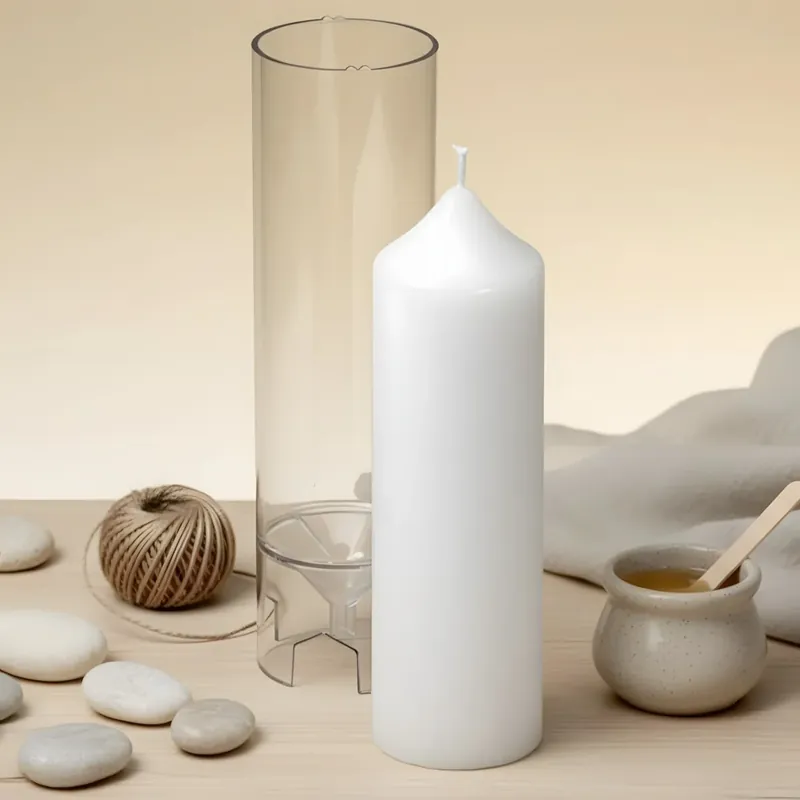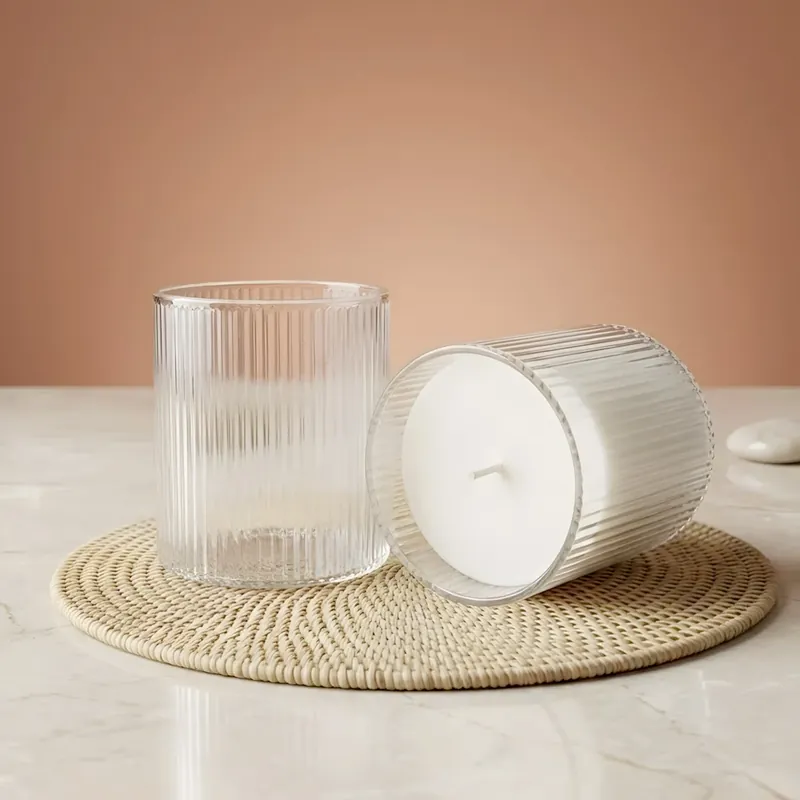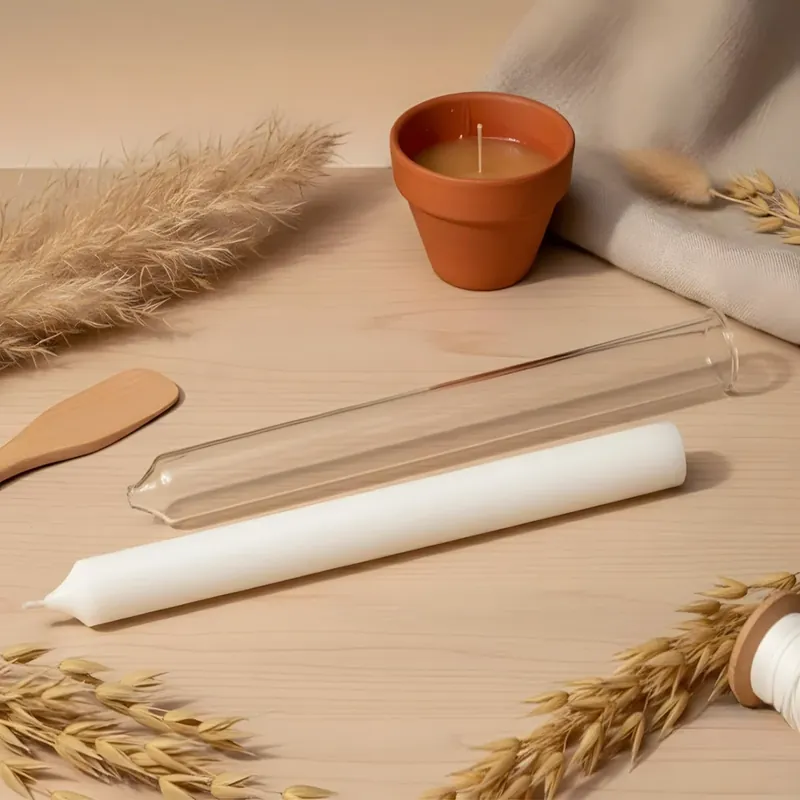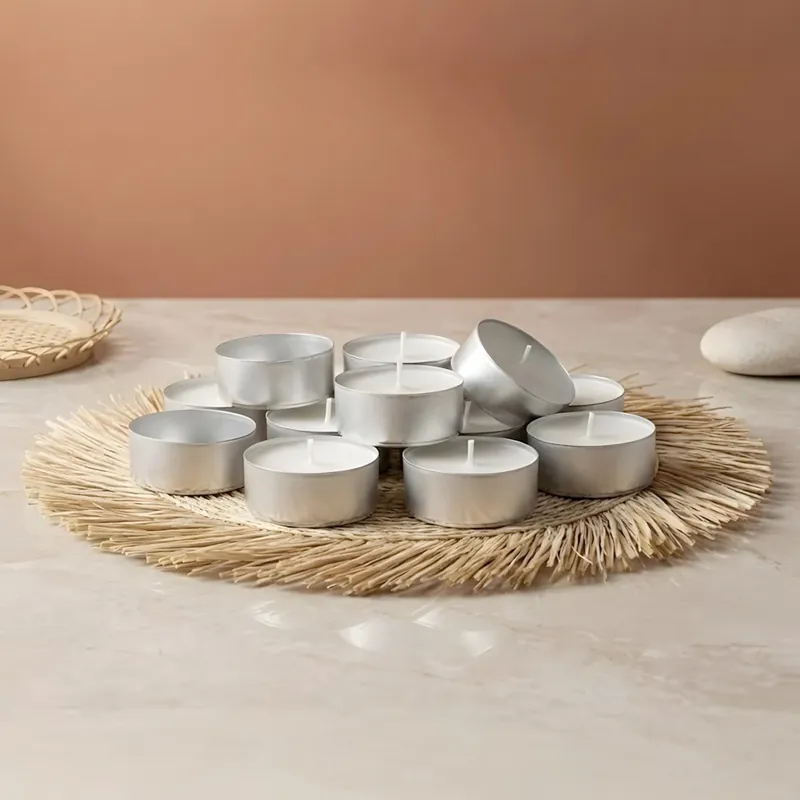
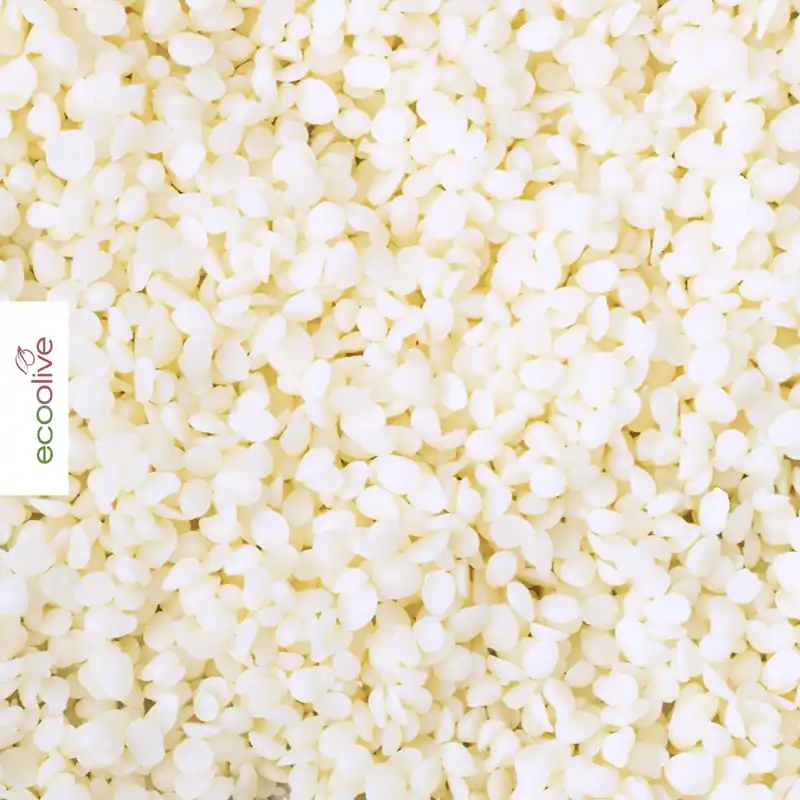




EcoOlive olive wax for elegant, fragrant container candles
EcoOlive granulated wax comes from Europe and is a 100% vegetable blend, mainly made from olive wax and natural additives to optimise combustion and olfactory diffusion.
It is biodegradable, paraffin-free, palm-free, GMO-free and not tested on animals. It is suitable for vegans and fully respects current environmental issues.
This quality wax offers exceptional olfactory performance both hot and cold, with a smooth, subtly shiny surface, and only needs to bepoured once for optimum results.
Candles in containers
EcoOlive wax is specially designed for making container candles with perfect adhesion to the glass and long-lasting scent. The recommended dosage is between 5% and 12% with our candle scents.
Characteristics of EcoOlive olive wax
EcoOlive wax is a specially developed blend of olive wax for making candles in containers. It is distinguished by its excellent scent diffusion, both hot and cold, its smooth, glossy finish after pouring and its strong adhesion to containers. Designed to be easy to work with, it requires only one pour and accepts fragrance fillers of up to 12%, giving an intense, refined scent.
Usage characteristics
- Typical melting point: 56°C (melting range tolerated between 50 and 58°C)
- Can temporarily withstand high temperatures up to 90°C with no adverse effects if cooled quickly
- Fragrance filler of up to 12% recommended for optimum olfactory performance
- Strong adhesion to containers for a perfect finish
- Colourants (powder, liquid or chips) can be added to personalise your creations
- Recommended curing time: 48 hours before test burning
- Suitable for all types of wick, with adjustment according to fragrance and container diameter
Quality and regulatory characteristics
- 100% plant-based and biodegradable
- Free from paraffin, soya, palm oil and traces of GMOs
- Not tested on animals and free from products of animal origin
- Complies with European REACH regulation (EC n°1907/2006) and CLP regulation n°1272/2008
- No substances classified as SVHC or endocrine disruptors by ECHA
- Stable product, with no dangerous reactions when used correctly
Dye integration
- If you are using granular colourants, heat the wax to 75°C, add the colourant and mix until completely dissolved.
- For liquid colours, heat the wax to 70°C.
To obtain a darker shade, add a small amount of black colourant.
Fragrance integration
Temporarily high temperatures (up to 90°C) have no negative effect if the wax is cooled quickly. Higher temperatures can cause the wax to discolour. Allow the wax to cool to a pouring temperature of 65°C, add the fragrance and mix well. Avoid using glasses containing copper and zinc, as this can accelerate discolouration.
Wherever possible, the fragrance should be added and mixed immediately before pouring. Remember to pour into pre-warmed containers.
Using olive wax for scented container candles
For optimum container filling
Containers must be clean and free of contaminants. They should be at least room temperature, but preheating to around 45-50°C may be beneficial. The pouring temperature is 65°C.
Choice of wicks
Vegetable waxes tend to require larger wicks than paraffin waxes. The fragrance, colour and configuration of the candle have a major impact on the choice of the best wick. We suggest using at least 1 to 2 wick sizes larger for this wax.
A wick that is too large can cause sooting, accelerate burn time and cause wax to escape from the side of the candle. Too small a wick will cause tunnelling and produce a smaller flame. Keep wicks trimmed to ¼ inch.
If you notice poor flame stability, try different wicks until you get an adequate flame. Small air bubbles may be observed around the wick during combustion; this is a normal phenomenon. The combustion test should be carried out after the candle has been left to rest for 48 hours.
Cooling the DIY candle
Allow the candles to cool to room temperature. After 48 hours of cooling, test the candle for wick diameter and mushrooming. Moulding occurs when carbon and/or other substances accumulate at the end of the wick and interfere with combustion. Fungus formation can lead to soot and unpleasant odours.
Each combination of wick size, wax, dye and fragrance should be tested to check the quality of combustion.
The temperatures indicated above are the result of our internal tests and may differ from the values indicated in the supplier’s technical data sheets.
The colour and shape of the chips may vary from batch to batch, but this has no effect on quality.