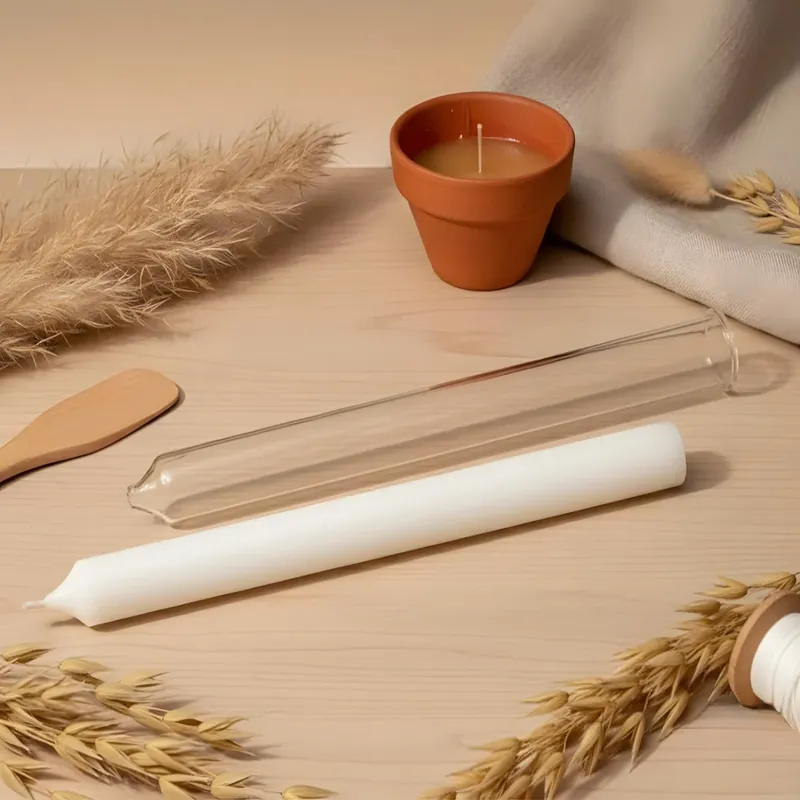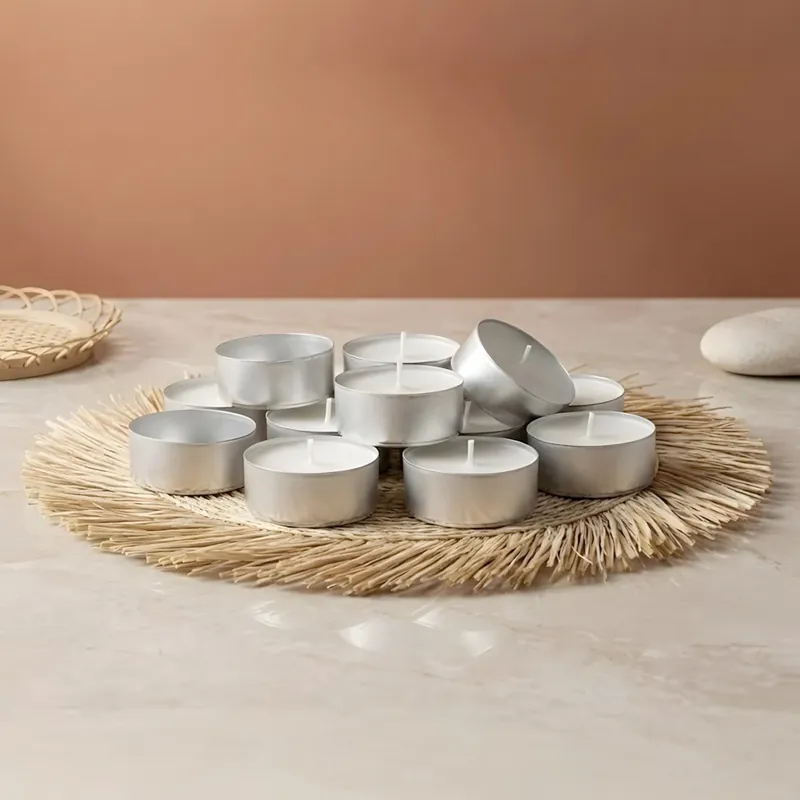
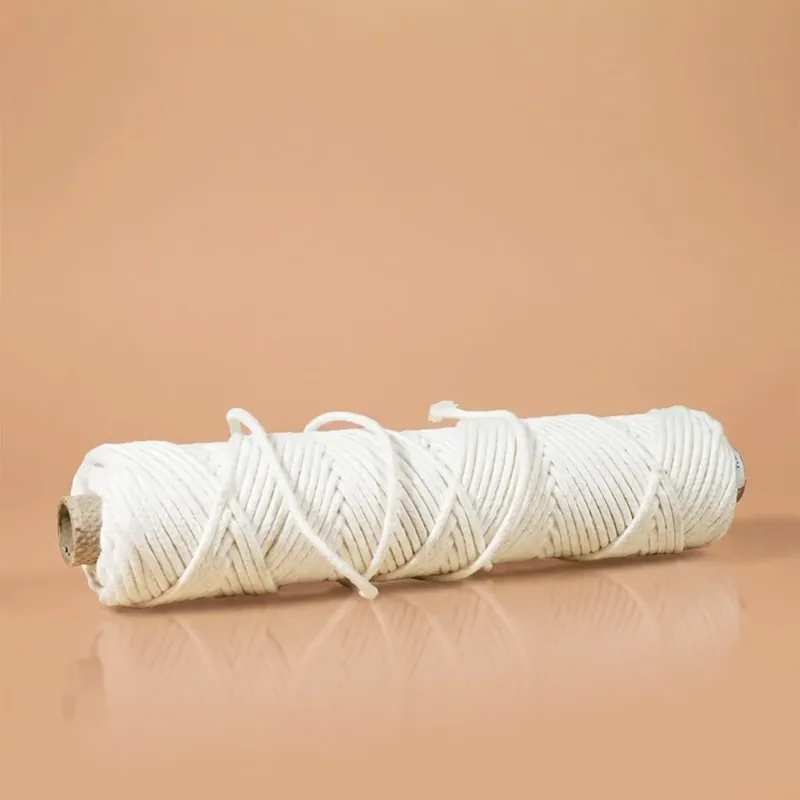




This round wick made from 100% pure natural cotton is perfectly suited to making beeswax or vegetable wax candles. It is also compatible with paraffin wax. Lead-free and with no metal core, it complies with REACH (EG 1907/2006) and the RAL-GZ-041 quality mark. Manufactured to ISO 9001:2015 quality standards .
Thanks to its adjustable length, it can be used for container candles, moulded candles and sparklers.
The benefits of coil wicks
Coil wicks offer an ideal solution for craftspeople and designers who want versatility, economy and control in their work.
- Economical: they are cheaper, ideal for reducing your production budget.
- Flexibility: you can cut the wick to the length you need, to suit your creations.
- Customisation: wicks can be pre-coated for better control of combustion.
How to choose the right candle wick size?
The choice of wick size depends on the diameter of the candle or container, the fragrance load, as well as the possible presence of dyes.
The more fragrance, dye or dense vegetable wax a candle contains, the more it may be necessary to increase the wick size. In that case, choose one to two sizes larger than those indicated in our table.
Please note that our correspondence table is based on creations without any added fragrance or dye.
| Diameter of your candle or container | Suitable wick reference |
|---|---|
| 10 to 15 mm | R0 |
| 15 to 25 mm | R1 |
| 25 to 45 mm | R2 |
| 45 to 60 mm | R3 |
| 60 to 90 mm | R4 |
- A wick that is too small = tunnelling or the flame going out.
- A wick that is too large = excessive flame, smoke or overheating of the candle.
Burn tests remain essential to determine the most suitable wick for your formulation and your mould.
If you are unsure of your choice, we recommend consulting our dedicated guides on choosing a candle wick.
Instructions for use
For R1, R2 and R3 wicks
For poured candles, dip the wick into the melted wax, leave it to dry, then repeat the operation once or twice. Once the wick is rigid, insert it into a round wick holder with a hole and tighten it with flat-nose pliers.
For moulded candles, insert the wick into the hole in the polycarbonate mould, then pull it outwards before fitting a sealing plug. For silicone moulds, carefully pierce the base with a needle and push the wick through.
For R4 wicks
For container candles using a larger diameter wick (such as R4), use a spring-loaded wick holder, which can be easily adjusted according to the size of the wick.
For moulded candles, follow the same procedure as for wicks R1 to R3.
Which wick holder should I choose, depending on the diameter of the wick?
After numerous tests, we have established the most suitable associations between our wick holders and the different wick references. We advise you to always carry out tests before any production.
| References | Recommended holders |
|---|---|
| R1 and R2 | PORTM – 70 ml – RON – 50 PORTM – 70 ml – REC – 50 PORTM25 – 50 PORTM30 – 50 MB-SOCLEPLAT-10 |
| R3 | PORTM30 – 50 PORTM – 200 ml – REC – 50 PORTM – 55605 – 10 MB-SOCLEPLAT-10 |
| R4 | PORTM – 55605 – 10 MB-SOCLEPLAT-10 |
If youhave any difficulty in making your choice, please consult our guide to choosing the right candle wick.
Before each lighting, cut the wick to 5 mm to ensure a clean, even flame. Avoid draughts, which are particularly important for tapered candles, which are more sensitive to draughts. Light the first wick long enough to establish stable combustion.
Wicks are sold in 5-metre or 50-metre packs.
It‘s important to carry out trials before you start creating candles, so that you can adjust the diameter and combustion to suit your own formulations.